Community

HOW DO WE BUILD UP OUR LATINO/HISPANIC COMMUNITY IN A CITY  BUILT ON SEGREGATION?

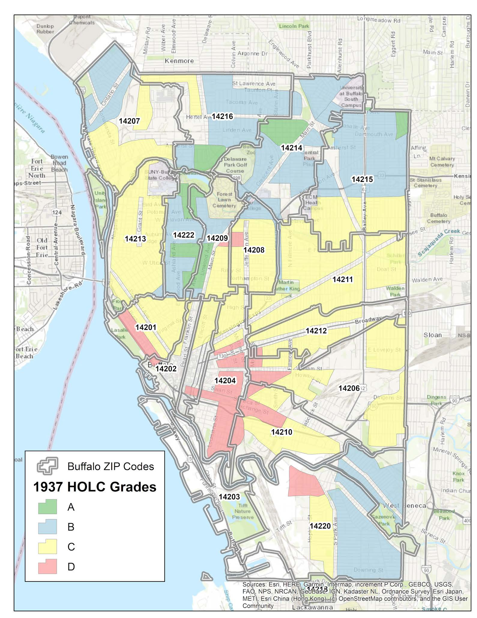
By: Stephanie Mejia, EMPA, Community Advocate I moved to Buffalo from Long Island when I was twenty-two years old, still fresh out of college and looking for the next step in my career. I moved knowing that a new area would be an adjustment, as all new areas are, but quickly noticed that Buffalo was different. It’s a medium sized city with a small-town feel, which I really grew to love since it reminded me of my hometown just a stone’s throw from NYC. So, when I recognized this familiar feeling, I was excited and did everything I could to make new friends and try new experiences. However, I quickly started to notice a big difference between the community at home and here. I grew up in a diverse area much like Buffalo, but the Latino community was tight knit where everyone was aware of each other’s needs. More specifically, we knew who in our community was an immigrant, documented or undocumented. From that connection, we all learned of each other and our household needs and provided support for each other. You may see it as being all up in each other’s business (which is true, who doesn’t love chismosiando?), but most of the time it was to help each other. You need a new apartment because your landlord is illegally evicting you? Call Rosa, she’s renting out a room. Need more work as a house cleaner? Call Marta, she needs an extra hand with some houses. Jose is new to the area from El Salvador, he needs work? OK, no worries, they’re looking for workers to help with shoveling for the upcoming snowstorm, so call Alex. There was a network ready to go all the time, and that network grew as the Latino community grew their families and their kids started to go to school. My childhood friends became my network, and their family and elders were included in that. I have fond memories of planning my quinceñera and having a strong network of Latin moms directing me to the dress maker, the venue, and the tamalera for food. When I was twelve years old, ICE came to our doorstep looking for my stepdad, and things became difficult after that. Our community, however, was there ready to assist. My mom knew who to call for information on a good immigration attorney, someone to watch my brother and I while she figured things out, someone to give us a ride to after school activities while my mom processed the grief of her partner leaving. In the community, mutual aid was abundant, which is why, as I sit here and write this, I have hope that Buffalo can one day have that network. Right now, we are facing unprecedented times in our nation and community where there is instability in all areas – finances, housing, health, human rights, and more. We are witnessing in real time the kidnapping of our undocumented and documented neighbors – empty cars found with driver doors left open in the early morning because ICE took someone on their way to work, kids coming home from school to no parents, businesses struggling or being forced to shut down because their staff were taken by ICE. Community support is needed now more than ever, and the building of it can be done if we understand the root issue of our disconnection with each other, which is segregation. I believe that our community is unaware of how our city has been purposefully made into the disconnected and isolated communities we see now. If you drive down Niagara Street or Main Street, you can see the vast difference in poverty and community make-up – the difference in how our roads is maintained, number of homeowners, vacant buildings, and green space. You can also see how some areas are dense with a specific race/ethnic group or economic class. Elmwood has a predominantly higher income of residents who are White, they also have an active strip of small businesses that are held up by continued financial support by not only its residents but also the leaders representing those areas. In contrast the West Side has seen an inconsistent trend in growth in small businesses, homeowners, and infrastructure that has been tirelessly held together by the low-to-middle class residents who still live in the area. So, what are the reasons for this inconsistent distribution of resources and growth? And how does that impact the ability of the Latino community in strengthening itself? The City of Buffalo has a significant inequity issue, which is why our communities are fragmented to the point where the makeup of our neighborhoods is impacted. The City of Buffalo is so segregated that we now have data to support which zip codes have a higher rate for negative health outcomes. Did you know that premature death percentages are higher for Black, Indigenous, People of Color (BIPOC) when compared to the White population; Black (60.3%), Hispanic (70%), Asian (52%), and White (30%) (The Harder We Run, Taylor et al 2021)? For our West Side community (14201, 14213, 14207, & 14222) where a predominant number of Latino/Hispanic households reside, COVID-19 infection cases were higher compared to zip codes like 14222, the Elmwood Village area, which has a higher rate of White households. Why are we talking about COVID-19 rates in specific zip codes? Well, it’s a good place to start when talking about how living in certain zip codes impacts our quality of life, from health, housing, to community building. We can see how certain areas were more impacted by the negative effects from COVID-19 compared to others (see maps below). If our community experienced higher rates of COVID-19, imagine how that impacted our small businesses, employment rates, and household stability. Sick and underserved communities cannot thrive as much as those who are not. Image Source: Partnership for the Public Good The areas mentioned above are referred to as “historically excluded areas” because that’s exactly what they are – an area that has been historically ignored and prevented from easily accessing opportunities to grow. More specifically, historically excluded means the systemic marginalization of certain groups using laws and policies to limit things such as economic opportunity or societal power. The West Side, an area predominantly composed of BIPOC residents, is a strong example of the effects of historical exclusion as it was impacted during COVID-19/by COVID-19 at a higher rate compared to areas that are not historically excluded. An example of early historical exclusion is redlining, which was a tactic used beginning in the 1930’s and continued to the 2010’s in Buffalo to segregate areas by social and racial class to maintain their value. This was a popular tactic used in the City of Buffalo to disenfranchise certain ethnic groups. The Federal Housing Association developed a system to categorize different neighborhoods

HOW DO WE BUILD UP OUR LATINO/HISPANIC COMMUNITY IN A CITY  BUILT ON SEGREGATION? Read More »
WHERE TO TURN TO FOR ICE ASSISTANCE Resource, Contacts, & Community Action Preparation

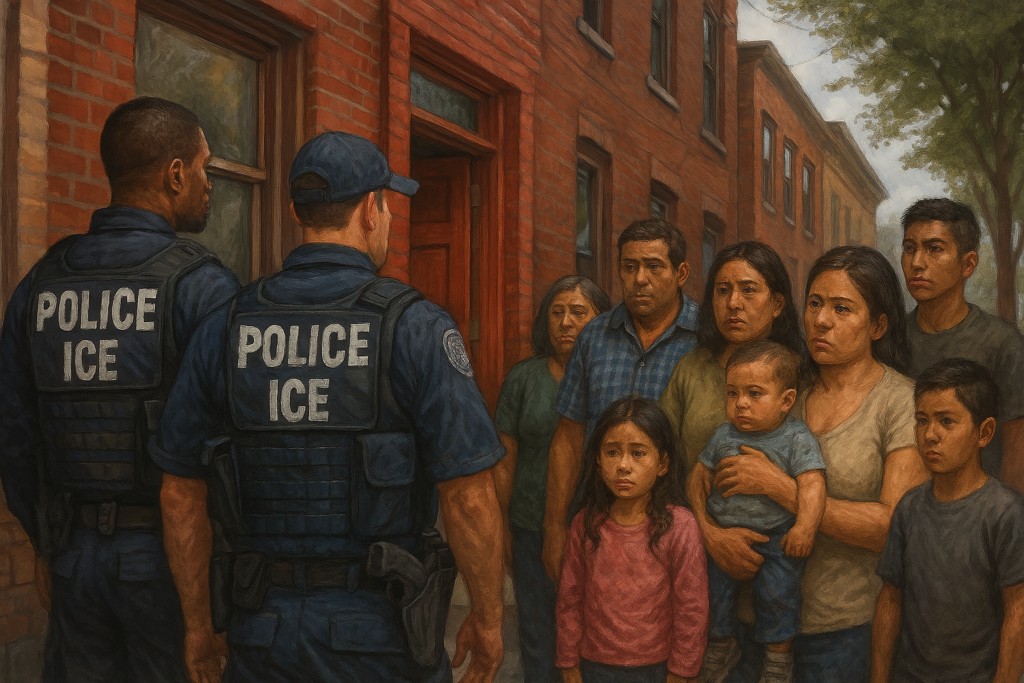
Prepared by Buffalo Latino Village   Buffalo has an active ICE field office and detention facility that affect local immigrants, including Latinos, though Puerto Ricans as U.S. citizens are sometimes wrongly targeted or harassed in broader enforcement sweeps, and the same with other American Latinos.  Recent operations and community responses show impacts on West Side, Elmwood, and other diverse neighborhoods where many Latino families live, work, and own small businesses.  Local ICE presence in Buffalo: ICE’s Buffalo Field Office is located at 250 Delaware Avenue and oversees enforcement for Western, Central, and Northern New York, which includes Buffalo’s Latino neighborhoods. Detained individuals are commonly taken to the Buffalo Federal Detention Facility in Batavia, an ICE–Enforcement and Removal Operations (ERO) site used for arrests from Buffalo and the region.  Recent raids and Latino communities: In November 2025, ICE and other federal agents arrested four undocumented workers from Mexico and Guatemala at a restaurant on Elmwood Avenue; local advocates and Assemblymember Jon Rivera condemned the operation as an attack on a diverse, immigrant-heavy corridor.   Reports indicate that during this period ICE went beyond a single business, setting up checkpoints, visiting Latino businesses, and entering nearby communities, raising fear among Latino workers and families regardless of status.  West Side and neighborhood impact: Buffalo’s West Side, long home to immigrants and refugees, has seen visible ICE activity, including agents knocking on doors and parking on residential blocks, which has alarmed residents in mixed-status families and diverse communities.​  Local elected officials have publicly criticized these operations, describing ICE as “out of control” and warning that policy is being “weaponized” against people who pose no public safety threat, a concern directly relevant to law‑abiding Latino and Puerto Rican residents. BUT THEY HAVE NOT GONE FAR ENOGHT!  Puerto Ricans, citizenship, and ICE: Puerto Ricans are U.S. citizens by birth, and national Latino organizations such as the Puerto Rican Bar Association have condemned ICE for incidents where Puerto Rican families were illegally detained alongside immigrants, underscoring the risk of racial profiling when Latinos are broadly targeted.  These statements argue that aggressive enforcement campaigns framed as “cleansing” undocumented populations can sweep up Puerto Ricans and other Latino citizens, deepening fear and confusion in communities like Buffalo’s where mixed-status households are common.  Courts, detention, and legal risks: Advocacy groups have documented that ICE arrests people in and around immigration courts in New York, including at the Buffalo Immigration Court, which can deter Latino immigrants from appearing for hearings or seeking help.  For those detained after Buffalo-area arrests, families often must navigate bond posting and communication through the Batavia facility, making access to legal counsel and support especially critical for Latino and mixed-status families. Latino focused groups  Buffalo Latino Village: Community newspaper and advocacy hub connecting Puerto Rican/Latino residents to resources, events, and activism; contact via email at latinovillage1@gmail.com or website for publishing, arts, and local news support.  El Batey Puerto Rican Center: Cultural center focused on Puerto Rican music, bomba, heritage, and events; reach Beatriz Flores at 716-348-0156 or elbateyprcenter@gmail.com for community gatherings and assistance.   Hispanic Heritage Council: Promotes Puerto Rican and Latino heritage through education, dance, and history programs; contact leaders like Casimiro Rodriguez at 716-912-3489 or cdr3455@gmail.com.  Los Tainos Senior Citizens Center: Serves Puerto Rican seniors with social services, activities, and support; listed as a key resource for older adults in the community.buffalolatinovillage+1​  Broader Latino organizations  Hispanos Unidos de Buffalo (HUB): Provides housing, mental health, substance use treatment, domestic violence support, food distribution, and rapid re-housing for Latino families; bilingual staff available, affiliate of Acacia Network.  Hispanics United of Buffalo: Offers integrated social services, health programs, and community empowerment for Hispanic/Latino residents.  Latino Housing Development Corporation: Assists with affordable housing and development needs for Latino families in Buffalo.  Hispanic Women’s League: Supports Latina women through advocacy, education, and social services.  Latino Veterans Association of WNY – Aids Puerto Rican/Latino veterans; contact Jose C. Pizarro at 716-207-7883. No longer in operation, but founder is a reliable source and can direct people to the right source of assistance or help.  Amor and Heritage: Focuses on Puerto Rican dance, heritage, and cultural preservation; reach MarCe Zerrate at 716-241-1510.  Direct Immigration-focused legal services:  Journey’s End Refugee Services Immigration Legal Services: Provides free immigration representation (citizenship, green cards, family reunification, asylum, work permits, TPS, DACA, and removal defense) with a Buffalo office at 2495 Main Street; services are aimed at low‑income immigrants across Western New York and often include community education sessions where Spanish interpretation can be requested.  Legal Aid Bureau of Buffalo/Immigration: Offers free immigration help for low‑income people, including naturalization, green card applications, family petitions, and advice when immigration status intersects with criminal cases or family court, which is important for Latino immigrants dealing with both ICE and local courts.  Catholic Charities of Buffalo/Immigration and Refugee Assistance: Provides low‑cost help with USCIS forms (adjustment of status, family‑based petitions, work authorization, naturalization) plus non‑legal services such as ESL, employment, and social services, which can support newly arrived or long‑time Latino immigrants. General civil legal aid with immigration awareness  ECBA Volunteer Lawyers Project: Delivers free civil legal services (family law, housing, consumer issues, and some immigration matters) to low‑income residents; this can be vital for Latino immigrants experiencing landlord disputes, divorce, custody, or domestic violence tied to immigration stress.  Neighborhood Legal Services: A public‑interest law firm offering free legal aid in areas such as housing, disability, and public benefits; they can advise immigrants and mixed‑status Latino families on rights around evictions, benefits eligibility, and related civil issues. How Latino immigrants can use these resources  Call intake lines or walk‑in hours (where available) to schedule a consultation and specifically ask for Spanish‑speaking staff or interpreters; many of these programs either have bilingual staff or access to interpretation.  When contacting any of these offices, bring or have ready all documents related to immigration status, prior filings, court notices, and any ICE paperwork, which helps attorneys quickly evaluate options for Latino clients facing removal, family separation, or status questions.    COMMUNITY ACTION Communities can protect immigrants from ICE by organizing rapid response networks, educating people about their rights, and building strong support systems that

WHERE TO TURN TO FOR ICE ASSISTANCE Resource, Contacts, & Community Action Preparation Read More »

A NOTE FROM THE TWILIGHT ZONE

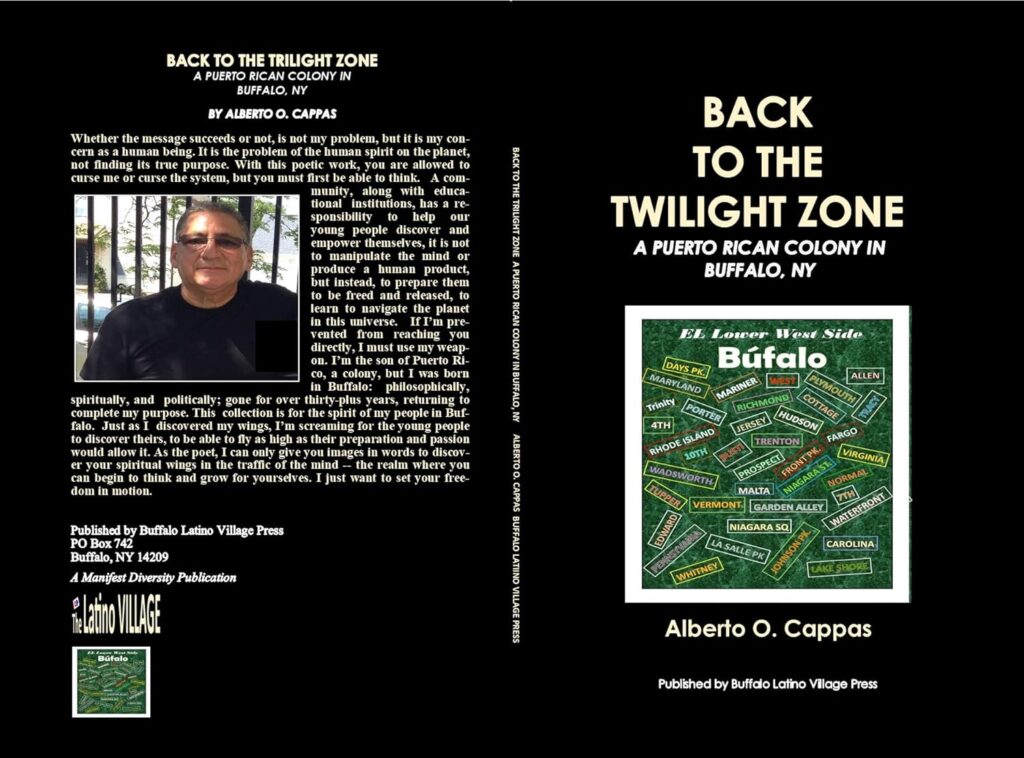
Book Review: “Back to the Twilight Zone: A Puerto Rican Colony in Buffalo, NY”   A NOTE FROM THE TWILIGHT ZONE By Steve Peraza, Ph.D.  I write to you as an Afro-Latino in Buffalo, NY, seeking light in the twilight zone of my life. I found a glimmer of hope in the poetry of Alberto Cappas, author of Back to the Twilight Zone, a poetry book that has changed my outlook on the city and the path I’m on…  Mr. Alberto O. Cappas is a poet, writer, journalist, and public servant, whose major contribution, as I see it, is writing and publishing meaningful verses, while creating platforms for other writers like me, who believe their life’s work, too, is in the literary arts. Cappas is from New York City like me, a transplant who put down roots in the City of Good Neighbors. His roots have blossomed into works of art like his newsletter, “The Buffalo Latino Village,” and his book, “Back to the Twilight Zone”, which I review below.  In my tumultuous journey of self-discovery, “Back to the Twilight Zone” has gifted me great peace of mind. To begin, I identify with a verse Cappas wrote in “Construction I”: “God is the artist. / The universe is the canvas” and, further, that “[I am] the painting on exhibit.” In these words, I find hope, because the god of my understanding has encouraged me to rebuild myself, even after my demons convinced me to explode, scattering my billion bits in the Buffalo wind.  In Buffalo, I have had good neighbors – when I wasn’t hungry. As of late, however, I have been peckish from poverty, and my neighbors have changed. They’re still good people, but they’re not the ones claiming to do good. I began my journey on the peaks of progressivism, but I’ve fallen deeply, right into a valley where the people, who look like me, seek scraps from city troughs. At pantries and food giveaways, I have made friends, but I’ve seen few of the ‘good neighbors’ I once knew as colleagues. In the classrooms and offices where I worked, folks remain well fed on food and ego.  In his poem “Ruse,” Cappas noted that Buffalo’s good neighbors are often “enticing a desire to acquire a piece of the cake without looking back at the misfortune.” I know too well what he means. The “City of Good Neighbors” trope can, in fact, be a ruse: “In this city the progressive movement is on vacation making love to their promotion.” This may not be true of all “good neighbors,” but it is true for many. (I was one of them!) The “good neighbors” don’t show up where the poor get fed Lest one think this is a book of critique, allow me to conclude with verses of hope. “Back to the Twilight Zone” is not a punch to the eye – it’s more like ice to reduce the swelling. “Si Se Puede” is one of those poems I read to treat bumps and bruises. “You are no advanced spirit,” Cappas wrote, “only a terrified body with a mind refusing to release the comfort zone.” As if he heard the questions that followed – the doubts I have about my capacity to persist – Cappas wrote: “You are an unbelievable work in progress in danger of misinterpretation.”  Do not misinterpret me: Back to the Twilight Zone gives me joy, hope, and inspiration. For me, “hope” is like a woman I love; she is the craft of writing; and she feeds my soul. In “Don’t Be Afraid to Undress Her,” Cappas encourages me to “[a]llow [my] mind to make love to the beautiful body.” I yearn to inspire with my own writing – hopefully the same way Cappas has inspired me – “Igniting the mind, bringing light to the words.”  If you are in search of light and hope in a dark world, “Back the Twilight Zone” is for you. Thank you, Alberto, for all that you do.   https://www.amazon.com/review/create-review/edit?ie=UTF8&channel=glance-detail&asin=B0CPFNTB3Y      

A NOTE FROM THE TWILIGHT ZONE Read More »

Scroll to Top