
PALESTINIAN POET RISHAN SHARES HIS PAIN AND HOPE
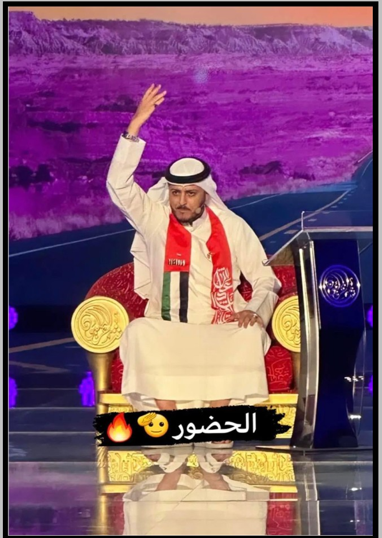
By Vicki Ross, WNY Peace Center Ex Officio Board Member When the group I joined to travel to Palestine was denied entry, I found myself in Madabah, Jordan — where I had the unexpected privilege of meeting the Palestinian poet known as Rishan. I was blessed to interview him, and we have remained in contact through WhatsApp. His eloquent fill this column with love and sadness, pain and hope. His award-winning poem earned distinction at the Million’s Poet competition for Nabati poetry in the UAE, where, as he told me, he “represented Palestine with great pride. I was a hero that night. By the way, you can find everything on YouTube — the poem, the judges’ praise, everything. But I’m still deeply saddened.” Rishan and his family have suffered greatly in their home community of Masafer Yatta. He told me that Israeli forces “steal everything, and they deliberately make life harsh and painful for people, animals, and even the land itself.” He spoke of two killings that shattered his family and community: Suleiman Hathaleen, whom Rishan called “Grandfather,” though he was technically an uncle. Suleiman encouraged him to continue writing poetry “to express the struggles of my suffering people.” He was killed when a truck transporting military equipment deliberately ran him over. He was 70 years old and grandfather to more than 100 grandchildren. Odeh Hathaleen, a dear friend of Rishan’s, a schoolteacher who taught English. He was a young father; his eldest child was only three years old, and his youngest just four months old when he was killed. “I work as a teacher for children,” Rishan told me, “but unfortunately, my salary is barely enough to get by, and I’m falling deeper into debt every day.” I asked him whether I should use his full given name. His answer was both brave and heartbreaking: “We spoke completely peacefully, and I don’t think there is anything illegal about that. But they don’t abide by the law. They want their version of the story to be the one that is heard and seen. But my story is the story of the entire Palestinian people. Every family, in every home, has a story like mine. I don’t know whether speaking my name could cause me harm or create problems for me. But if it does, I don’t care. I’m only telling the truth so that history will remember it. The most important thing to me is that the world hears me, that my children are protected, and that I can live in peace and have a decent job with a salary at the end of every month — or a business that provides enough income for me to spend holidays with my family, take them to America to enjoy the atmosphere, and travel with them to Europe and around the world. I’m a human being. I love life, and I simply want to live in peace and enjoy it.” He added that he hopes “the American people can learn about the story of ‘Rishan,’ the Palestinian poet who hid behind his pen name and used his poetry to express the cause of his people. His identity is not what matters; his cause is what matters.” Just this past month, he wrote to me: “On my way to the barbershop today, just minutes before sending this message, my wife, my child Yaman, and I were stopped by a racist army patrol. They searched our car and forced my wife to remove her niqab. While we were being subjected to this abuse and humiliation, a group of settlers celebrating the Sabbath passed by. They hurled insults at us and incited the soldiers to kill us. This is the reality we are forced to live through — harassment, humiliation, and threats, even when we are simply going about our daily lives with our family.” He sent a photo afterward: “This is me and Yaman at the barbershop, smiling at life.” Please contact your elected representatives in Congress — Senators Schumer and Gillibrand, and your member of Congress (Kennedy, Langworthy, Tenney, or Morelle) — at 202-224-3121. Urge them to STOP ARMING ISRAEL and to vote against the NDAA and any merging of U.S. and Israeli military operations. Solidarity, Blessings, Thanks, Peace, and Love to our dear Palestinian beloveds — All One in the Same Human Family. Sí se puede — ¡Juntos!
PALESTINIAN POET RISHAN SHARES HIS PAIN AND HOPE Read More »