Community News

WNY PEACE CENTER HIRES NEW EXECUTIVE DIRECTOR

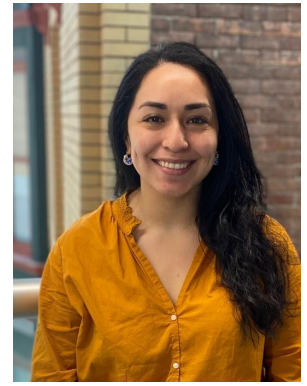
Buffalo, NY — The Western New York Peace Center (WNYPC), one of the region’s longeststanding organizations dedicated to peace and justice, and nonviolence—has announced theappointment of Stephanie Mejia as its new Executive Director. Mejia brings a strong record ofcommunity advocacy, nonprofit leadership, and frontline service to vulnerable populations acrossBuffalo and Western New York. A daughter of immigrants and a longtime resident ofBuffalo’s West Side, Mejia has built her career aroundsupporting marginalized communities, advancing humanrights, and strengthening grassroots networks.She previously served as Supervisor of Housing andHomeless Services at Catholic Charities of Buffalo, whereshe oversaw rapid rehousing programs, coordinated servicesfor individuals and families experiencing homelessness, andled teams working directly with those in crisis. Prior to thatrole, she worked with the Lt. Col. Matt Urban HumanServices Center of WNY, providing case management andcommunity support. Mejia is also known for her public advocacy and writing, contributing essays and commentary on immigrant experiences, community resilience, and social justice issues. She has served on the Board of Directors for Big Table Community Café, a pay-what-you-can nonprofit on Buffalo’s West Side dedicated to food security and community nourishment. “We are thrilled to welcome Stephanie Mejia into this leadership role,” said Vickie Ross, WNY Peace Center co-founder and long-time Board member, associated with the NYYPC since moving to Buffalo in 2007 “Her lived experience, professional expertise, and deep commitment to justicereflect the values that have guided the Peace Center for over five decades. Stephanie represents the next generation of leadership in our movement. She is young, community-rooted, and possesses the experience it takes to guide the Peace Center to the next phase of its mission.” The WNYPC was one of the first chapters of Rev. Dr. King’s Clergy and Laity Concerned and strives to live up to his vision and activities.Mejia holds a bachelor’s degree in public policy from Hobart and William Smith Colleges and an Executive Master of Public Administration, bringing both academic training and practical experience to her new position. “I am honored to join the WNY Peace Center at such a critical moment for our community,” Mejia said in a recent radio interview. “The work of peace and justice is collective work. I look forward to building with our members, partners, and neighbors to strengthen our shared vision for a more equitable Western New York.”As Executive Director, Mejia will lead the organization’s ongoing initiatives in racial justice, immigrant rights, anti-violence work, environmental justice, and community education, while also guiding new programs that reflect the evolving needs of the region.About the Western New York Peace Center Founded in 1967, the Western New York Peace Center is dedicated to promoting peace, justice, and nonviolence through education, advocacy, and community action. The Center works across multiple issue areas, including racial justice, economic equity, immigrant rights, environmental protection, and anti-war organizing. Media Contact: Victoria Ross, WNY Peace Center Email: info@wnypeace.org Phone:716-332-3904 Website: www.wnypeace.org. Stephanie Mejia: 516-662-5607,director@wnypeace.org

WNY PEACE CENTER HIRES NEW EXECUTIVE DIRECTOR Read More »
HOW DO WE BUILD UP OUR LATINO/HISPANIC COMMUNITY IN A CITY  BUILT ON SEGREGATION?

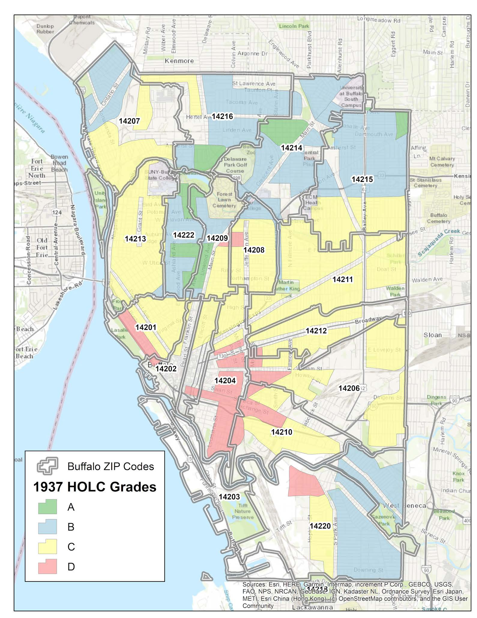
By: Stephanie Mejia, EMPA, Community Advocate I moved to Buffalo from Long Island when I was twenty-two years old, still fresh out of college and looking for the next step in my career. I moved knowing that a new area would be an adjustment, as all new areas are, but quickly noticed that Buffalo was different. It’s a medium sized city with a small-town feel, which I really grew to love since it reminded me of my hometown just a stone’s throw from NYC. So, when I recognized this familiar feeling, I was excited and did everything I could to make new friends and try new experiences. However, I quickly started to notice a big difference between the community at home and here. I grew up in a diverse area much like Buffalo, but the Latino community was tight knit where everyone was aware of each other’s needs. More specifically, we knew who in our community was an immigrant, documented or undocumented. From that connection, we all learned of each other and our household needs and provided support for each other. You may see it as being all up in each other’s business (which is true, who doesn’t love chismosiando?), but most of the time it was to help each other. You need a new apartment because your landlord is illegally evicting you? Call Rosa, she’s renting out a room. Need more work as a house cleaner? Call Marta, she needs an extra hand with some houses. Jose is new to the area from El Salvador, he needs work? OK, no worries, they’re looking for workers to help with shoveling for the upcoming snowstorm, so call Alex. There was a network ready to go all the time, and that network grew as the Latino community grew their families and their kids started to go to school. My childhood friends became my network, and their family and elders were included in that. I have fond memories of planning my quinceñera and having a strong network of Latin moms directing me to the dress maker, the venue, and the tamalera for food. When I was twelve years old, ICE came to our doorstep looking for my stepdad, and things became difficult after that. Our community, however, was there ready to assist. My mom knew who to call for information on a good immigration attorney, someone to watch my brother and I while she figured things out, someone to give us a ride to after school activities while my mom processed the grief of her partner leaving. In the community, mutual aid was abundant, which is why, as I sit here and write this, I have hope that Buffalo can one day have that network. Right now, we are facing unprecedented times in our nation and community where there is instability in all areas – finances, housing, health, human rights, and more. We are witnessing in real time the kidnapping of our undocumented and documented neighbors – empty cars found with driver doors left open in the early morning because ICE took someone on their way to work, kids coming home from school to no parents, businesses struggling or being forced to shut down because their staff were taken by ICE. Community support is needed now more than ever, and the building of it can be done if we understand the root issue of our disconnection with each other, which is segregation. I believe that our community is unaware of how our city has been purposefully made into the disconnected and isolated communities we see now. If you drive down Niagara Street or Main Street, you can see the vast difference in poverty and community make-up – the difference in how our roads is maintained, number of homeowners, vacant buildings, and green space. You can also see how some areas are dense with a specific race/ethnic group or economic class. Elmwood has a predominantly higher income of residents who are White, they also have an active strip of small businesses that are held up by continued financial support by not only its residents but also the leaders representing those areas. In contrast the West Side has seen an inconsistent trend in growth in small businesses, homeowners, and infrastructure that has been tirelessly held together by the low-to-middle class residents who still live in the area. So, what are the reasons for this inconsistent distribution of resources and growth? And how does that impact the ability of the Latino community in strengthening itself? The City of Buffalo has a significant inequity issue, which is why our communities are fragmented to the point where the makeup of our neighborhoods is impacted. The City of Buffalo is so segregated that we now have data to support which zip codes have a higher rate for negative health outcomes. Did you know that premature death percentages are higher for Black, Indigenous, People of Color (BIPOC) when compared to the White population; Black (60.3%), Hispanic (70%), Asian (52%), and White (30%) (The Harder We Run, Taylor et al 2021)? For our West Side community (14201, 14213, 14207, & 14222) where a predominant number of Latino/Hispanic households reside, COVID-19 infection cases were higher compared to zip codes like 14222, the Elmwood Village area, which has a higher rate of White households. Why are we talking about COVID-19 rates in specific zip codes? Well, it’s a good place to start when talking about how living in certain zip codes impacts our quality of life, from health, housing, to community building. We can see how certain areas were more impacted by the negative effects from COVID-19 compared to others (see maps below). If our community experienced higher rates of COVID-19, imagine how that impacted our small businesses, employment rates, and household stability. Sick and underserved communities cannot thrive as much as those who are not. Image Source: Partnership for the Public Good The areas mentioned above are referred to as “historically excluded areas” because that’s exactly what they are – an area that has been historically ignored and prevented from easily accessing opportunities to grow. More specifically, historically excluded means the systemic marginalization of certain groups using laws and policies to limit things such as economic opportunity or societal power. The West Side, an area predominantly composed of BIPOC residents, is a strong example of the effects of historical exclusion as it was impacted during COVID-19/by COVID-19 at a higher rate compared to areas that are not historically excluded. An example of early historical exclusion is redlining, which was a tactic used beginning in the 1930’s and continued to the 2010’s in Buffalo to segregate areas by social and racial class to maintain their value. This was a popular tactic used in the City of Buffalo to disenfranchise certain ethnic groups. The Federal Housing Association developed a system to categorize different neighborhoods

HOW DO WE BUILD UP OUR LATINO/HISPANIC COMMUNITY IN A CITY  BUILT ON SEGREGATION? Read More »

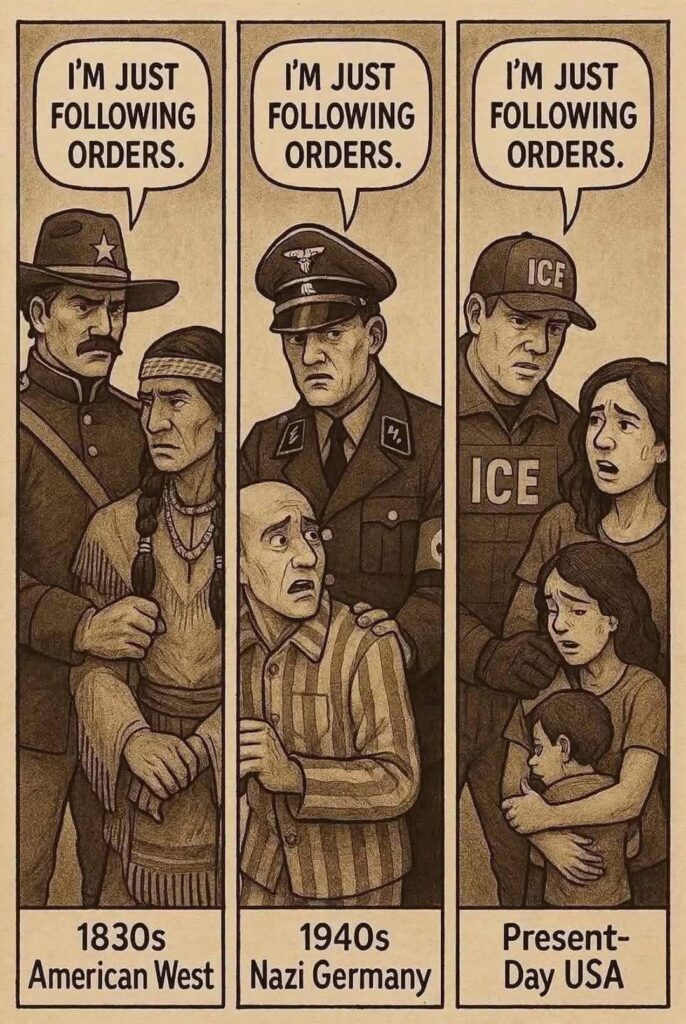
ICE HOLDING FACILITY IN LOCAL BUFFALO HOTEL! 

ICE HOLDING FACILITY IN LOCAL BUFFALO HOTEL!  Posted by Buffalo Latino Village:    We keep reading about the Westin Hotels & Resorts  in Buffalo being used as an ICE holding facility. So, one of our writers had to go and found that 250 Delaware is also ICE’s field office in the same building.  So when you put a federal enforcement office and a luxury hotel under one roof and refuse to be transparent about where people are being held, you create the perfect setup for “we’re not a detention site” while still kidnapping people through the building.    We are not saying people other than the politicians have seen the documents proving the Westin is a holding center,  but what we are saying is that the government’s secrecy and the way these operations work make it completely believable that parts of that complex are being used to hold kidnapped people, even briefly.   Buffalo is a Democratic city, if local and state Democrats wanted these raids and hidden holding sites shut down, they have tools, platforms, and leverage to fight it, but elections are coming up and they are choosing not to.  Governing through fear, silence, and confusion is easier than protecting immigrants and standing up to federal agencies.  People should start contacting the local and state elected officials.    Why would the Westin or Delaware North become an ICE holding facility? Don’t ICE holding facilities require GOVERNMENT CONTRACTS?  Who at the local and State level dealt or deals with Delaware North and would be incentiviced to have this be a ICE field office and holding center? Who benefits from this?  Isn’t Kathy Hochul husband a VP at Delaware North? Why are we still pretending our hands are tied when we witness the brutalization of an entire demographic?    Why are your taxes being used to brutalize and terrorize children when your own are going hungry? Your houses are burning down? Your roads are going to shit? Your buildings are falling apart around you? But politicians keep getting wealthy at your expense and blaming those that cannot defend themselves for the chaos and decay they have created.   Wake tf up. Start asking question!!!! #avoicelessvoice #daniasays #ice #westinbuffalo #delawarenorth #icefieldoffice

ICE HOLDING FACILITY IN LOCAL BUFFALO HOTEL!  Read More »

Scroll to Top