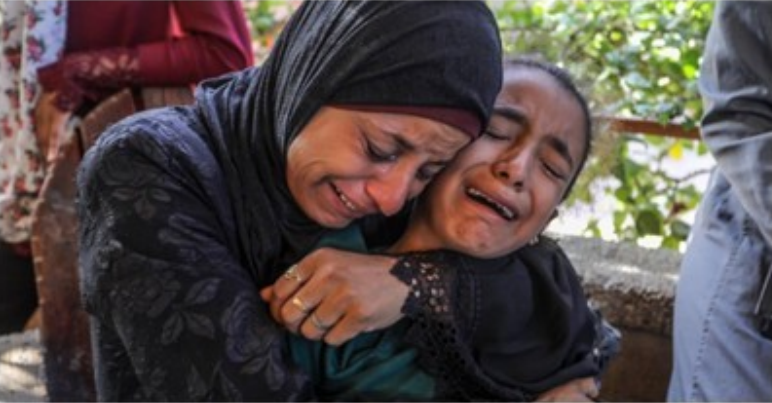
Across the United States and here at home in Buffalo-Latino communities are grappling with one of the
most difficult and emotionally charged global issues of our time: the war in Gaza.
While there is no single unified Latino position, a clear pattern is emerging at the national, state, and local levels rooted in humanitarian concern, shaped by lived experience, and increasingly visible in public discourse.
NATIONAL OVERVIEW
Across the country, Latino opinion on Gaza reflects both diversity and a growing humanitarian focus.
Polling indicates significant concern over civilian casualties following the escalation tied to the October 7 attacks.
Latinos consistently show:
-Strong support for an immediate ceasefire
-High concem for civilian suffering in Gaza
Low support for continued unconditional U.S. military aid related to the conflict.
A substantial share of Latinos describes Israel’s actions as potentially amounting to genocide, while others reject that framing or remain uncertain. The overall trend, however, is clear: Latino communities are among the most critical of the humanitarian impact of the war compared to other major U.S. demographic groups.
These views are shaped by:
-Histories of colonization and displacement
-Civil rights struggle in the United States
-Strong identification with global humanitarian and social justice movements
NEW YORK STATE CONTEXT
In New York, Latino communities tend to reflect a more progressive political environment, particularly in urban areas.
-Common positions include:
-Support for ceasefire resolutions
-Calls for expanded humanitarian aid
-Increased attention to international law and accountability
Younger Latinos in particular are more likely to use stronger moral language when describing the conflict, while older generations tend to emphasize peace, stability, and de-escalation without adopting more charged terminology.
BUFFALO: A CARIBBEAN LATINO LENS
Buffalo’s Latino community is primarily shaped by Puerto Rican and Dominican populations,
giving it a distinct Caribbean cultural and political identity.
PUERTO RICAN COMMUNITY
Puerto Ricans remain the largest and most influential Latino
group in Buffalo. Their political outlook is often informed by:
-Civil rights traditions
-Awareness of colonial history
-Strong engagement in community organizing
-In Gaza, Puerto Rican voices in Buffalo generally:
-Strongly support a ceasefire
-Express deep concern for Palestinian civilians
-Show increasing opennes openness particularly among younger residents to framing the crisis in human rights or even genocide-related terms
DOMINICAN COMMUNITY: The Dominican population in Buffalo is growing and
becoming more visible in civic life and local advocacy.
Their perspectives generally include:
-Alignment with Puerto Rican community concerns
-Strong emphasis on humanitarian impact and civilian suffering
-Expanding youth engagement in social and political issues
In Gaza, Dominican voices tend to:
-Support ending the war
-Advocate for humanitarian protection
-Show a gradual but noticeable shift toward stronger moral language among younger generations
OTHER LATINO COMMUNITIES:
Mexican and Central American populations in Buffalo remain smaller and are less publicly vocal on foreign policy issues.
However, when engaged, they generally express:
-Support for peace and de-escalation
-Limited but growing awareness of the conflict
GENERATIONAL DIVIDE:
Across national, state, and local levels, age remains one of the strongest dividing lines.
Younger Latinos:
-More politically engaged on global issues
-More likely to use terms such as “genocide” or “human rights crisis”
-Active in advocacy, social media, and grassroots organizing
Older Latinos:
-Deep concern for human suffering
-Preference for diplomatic language such as “ceasefire” and “peace.”
-More cautious about political labeling of the conflict
COMMUNITY CONSENSUS:
Despite differences in language and interpretation, several points of broad agreement emerge:
-Civilian suffering in Gaza is a major concem
-Widespread support for an immediate ceasefire
-The scale of destruction has raised serious humanitarian alarm across communities
-The central divide lies not in whether suffering exists.
but in how it is defined and described.
CONCLUSION:
From Buffalo to communities across the nation, Latino voices are increasingly part of the public conversation on Gaza.
While diverse in opinion,
they reflect a shared humanitarian concern and a growing insistence that civilian lives must be protected.
In Buffalo, that voice is shaped primarily by Puerto Rican and Dominican communities who continue to advocate for
peace, accountability, and human dignity in global affairs.
REFERENCES:
Pew Research Center -Latino political attitudes and U.S.public
opinion- https://www.pewresearch.org
Latino Decisions-Latino voter pollingand politicalbehavior
https://www.latinodecisions.com
Gallup -U.S. public opinion on Israel and Gazaconflict https://news.gallup.com
Axios (Ipsos polling coverage) -U.S. and Latino voter sentiment
on Gaza war- https://www.axios.com
United Nations OCHA-Gazahumanitarian situation reports
https://www.unocha.org
Intemational Court of Justice – South Africa v. Israel case materials
https://www.icj-cij.org
Human Rights Watch -Reports on Gaza and international humanitarian law- https://www.hrw.org
 0
0
 0
0