Uncategorized

A FIRE AT THE UNITED NATIONS: A TIBETAN CRY THE WORLD MUST NOT IGNORE

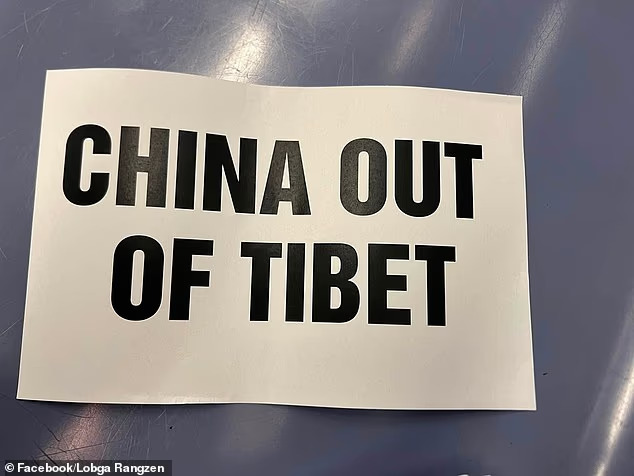
By Alberto O. Cappas On July 2, 2026, a man walked to the front of the United Nations building in New York City carrying nothing more than a Tibetan flag, a handful of papers, and a message he believed the world had forgotten. His name was Lobga Rangzen, and in a moment that should shake every human soul awake, he set himself on fire. He did not do this out of madness. He did not do it for spectacle. He did it because he believed that the suffering of his people — the Tibetan people — had become invisible to the world. And he believed that only an act of pure sacrifice could force us to look again. I have written about many struggles in my life — Puerto Rican identity, Latino empowerment, community survival, the fight for dignity in forgotten neighborhoods. But what happened outside the United Nations was not just a political act. It was a spiritual one. It was a human being offering his own life to remind us that oppression anywhere is a wound everywhere. A Message Delivered Through Flames: Witnesses say Rangzen scattered papers that read “China get out of Tibet.” He spoke briefly about unity, independence, and the right of his people to exist without fear. Then he lit the fire. The next day, a small memorial appeared — candles, flags, and handwritten notes. A quiet corner of Manhattan became a sacred space, a place where grief and courage met. This was not an isolated act. More than 150 Tibetans have self‑immolated since 2009, most inside Tibet, where their voices are silenced. Rangzen’s death is one of the few to occur on American soil — and the first directly in front of the United Nations. He chose that location deliberately. He wanted the world’s leaders to see what desperation looks like when every other door has been closed. The Law That Sparked the Fire: His protest came one day after China enacted its new Ethnic Unity Law, a policy that critics say threatens the cultural and political survival of Tibetans. Human rights groups around the world have condemned it. Tibetans fear it will erase what remains of their identity. Rangzen believed the world was not paying attention. So he gave the world something it could not ignore. Why This Matters to Us: Some may ask: Why should we care? Why should a Latino newspaper in Buffalo write about Tibet? Because oppression has no borders. Because the struggle for cultural survival — whether in Tibet, Puerto Rico, East Harlem, or Buffalo — is a shared human story. Because when a man gives his life to call attention to injustice, we have a moral obligation to listen. And because communities like ours, who know what it means to fight for identity, dignity, recognition, independence, understand the language of struggle better than most. A Parallel We Cannot Ignore: When I look at what happened to this Tibetan activist, I cannot help but think about what is happening to our own people — families torn apart by ICE, children separated from parents, communities living in fear of sudden raids. The pain may take different forms, but the root is the same: a system that treats human beings as disposable. Just as Tibetans fight to preserve their identity and humanity, many Latino families in this country are fighting simply to remain whole. These struggles speak to each other, and they remind us that injustice anywhere demands solidarity everywhere. A Personal Reflection: I cannot look at this event simply as news. I see it as a message — a painful, burning message — about the cost of silence. I have long admired the teachings, discipline, and peaceful strength of the Tibetan people. Their struggle is not just political; it is deeply spiritual. I encourage our readers to learn about the Tibetan community, its history, its culture, and its ongoing fight for survival. Reach out. Read. Listen. Connect. Let this man’s sacrifice open a door to understanding. We cannot bring him back. But we can honor him by refusing to look away. This article is dedicated to a former co‑worker, a proud member of the Tibetan community, who took the time to teach me about his people. His kindness, patience, and wisdom opened my eyes long before this tragedy, and I carry his lessons with me today.

A FIRE AT THE UNITED NATIONS: A TIBETAN CRY THE WORLD MUST NOT IGNORE Read More »
HOMICIDE RULING IN ERIE COUNTY HOLDING CENTER DEATH RAISES URGENT QUESTIONS, COMMUNITY DEMANDS TRANSPARENCY 

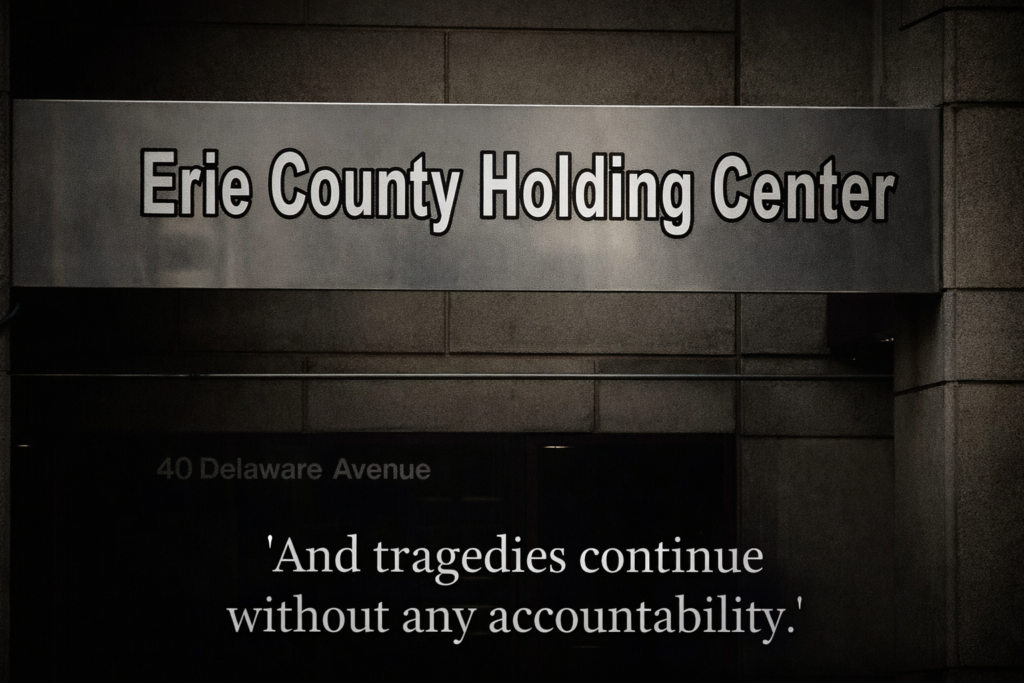
By Alberto O. Cappas Buffalo, NY — The death of 38‑year‑old Antonio Pizarro, a member of a long and distinguished Puerto Rican family, has been officially ruled a homicide by the Erie County Medical Examiner, intensifying scrutiny of the Erie County Holding Center and renewing calls for accountability from families, advocates, and community organizations. Pizarro died on July 4, 2026 while in custody. Although the Medical Examiner has confirmed the manner of death, officials have not released additional details regarding the circumstances leading to the fatal incident. Local outlet WIVB‑TV (Channel 4) verified the homicide ruling and reported that the Erie County Sheriff’s Office continues to conduct interviews and gather evidence. His name has not yet appeared in the New York State Commission of Correction (SCOC) mortality database, a delay consistent with state procedure. Cases are listed only after the county completes its internal investigation and submits full documentation — a process that can take weeks or months. A Facility Under Intensifying Scrutiny Pizarro’s death adds to a troubling pattern at the Holding Center. Based on SCOC reports and confirmed media coverage, seven individuals have died at the facility in recent years: Tinamarie Cordovano – April 25, 2024 James Ellis – November 30, 2021 Michael Frears – March 13, 2021 William Henley – November 27, 2022 Sean Riordan – June 14, 2022 Donald McCoy – December 21, 2023 Antonio Pizarro – July 4, 2026 Of these, only Henley’s SCOC report includes demographic information. The nationality or ethnic background of the others — including Pizarro — has not been publicly disclosed. Advocates have long raised concerns about medical care, mental‑health response, understaffing, and transparency at the Holding Center. The homicide ruling has intensified demands for reform. Community Voices Call for Transparency and Accountability Buffalo’s Black and Puerto Rican/Latino communities — historically impacted by unequal treatment in the criminal justice system — are expressing deep concern. For many, Pizarro’s death reflects systemic failures rather than an isolated tragedy. Families and community organizations, including Buffalo Latino Village, point to recurring issues: delayed information, incomplete public statements, and investigations that stretch on for months. Each new death reinforces fears that the Holding Center is failing in its responsibility to keep people safe. A Critical Missing Piece: Who Works Inside the Holding Center? A major concern is the lack of demographic transparency regarding correctional staff and administrators. Neither the Erie County Sheriff’s Office nor the County Personnel Department publicly releases racial or ethnic breakdowns of employees — including how many are Black or Puerto Rican/Latino. This absence is striking given that many detainees come from Buffalo’s East Side, West Side, and Latino neighborhoods. Advocates argue that staff diversity is essential for cultural competency, bias training, and building trust. Buffalo Latino Village raises key questions: Does the staff reflect Buffalo’s demographic diversity? How many correctional officers are Black or Puerto Rican/Latino? Are there Latino administrators who understand cultural and linguistic needs? Why is demographic transparency standard in schools and public agencies, but not in a jail entrusted with human lives? Community leaders say underrepresentation contributes to mistrust, miscommunication, and a lack of cultural understanding inside the facility. Increasing diversity — especially hiring more Black and Puerto Rican/Latino officers from Buffalo — could improve communication, reduce tensions, and strengthen accountability. A Community United for Change Buffalo Latino Village urges Erie County officials to take immediate action: Release demographic data on Holding Center staff Increase recruitment of Black and Puerto Rican/Latino employees Strengthen oversight and accountability within the facility Ensure independent review of incidents involving violence or neglect Engage directly with affected communities in shaping reforms The death of Antonio Pizarro must not become another statistic. It must be a turning point — a moment when Erie County recognizes that public safety includes the safety of those in custody, and that justice requires transparency, honesty, and meaningful change. Buffalo Latino Village will continue monitoring developments and amplifying the voices of families demanding answers. The community deserves nothing less. Note: Some information in this release is based on local media coverage, social media, past and present news reports, community complaints, and AI‑assisted research. Please confirm details with trusted sources.   

HOMICIDE RULING IN ERIE COUNTY HOLDING CENTER DEATH RAISES URGENT QUESTIONS, COMMUNITY DEMANDS TRANSPARENCY  Read More »

69TH ANNUAL ALLENTOWN ART FESTIVAL RETURNS TO BUFFALO JUNE 13-14

Buffalo, NY – The Allentown Village Society proudly announces the 69th Annual Allentown Art Festival, taking place Saturday and Sunday, June 13-14, from 11:00 a.m. to 6:00 p.m., rain or shine, throughout the Historic Allentown District of Buffalo, New York. The festival spans Delaware Avenue, Franklin Street, Allen Street, and Virginia Street, transforming the neighborhood into one of Westen New York’s most celebrated outdoor arts experiences. Founded in 1958, the all-volunteer Allentown Village Society has produced this iconic event for nearly seven decades. The Society’s legacу has been formally recognized and preserved by the U.S. Library of Congress as a significant local cultural contribution. A Signature Summer Tradition:The Allentown Art Festival is widely regarded as one of Buffalo’s premier pre-summer traditions, drawing thousands of visitors from across the region and beyond. Attendees enjoy an immersive blend of fine art, local architecture, food vendors, live street entertainment, and the vibrant creative energy that defines the Allentown community.This year’s festival will feature more than 320 juried artists and craftspeople, offering an exceptional variety of artwork suitable for all ages and interests. Community Impact and Annual Giving:The Allentown Village Society continues its longstanding commitment to supporting the arts and education. Thanks to last year’s strong attendance, the Society distributed:-$18.500 in Artist Awards-$17,000 in Student Scholarships-$4,950 in Poster Contest Prizes-$5,000 to the NYS Summer School of the Arts Over the past 30 years, the Festival has contributed more than $900,000 throughout Erie County and the City of Buffalo, supporting scholarships andarts programming at both school and gallery levels. Visitor Amenities:Festivalgoers will have access to a wide range of amenities, including on-site concessions, food trucks, temporary restrooms, and the many restaurants, hotels, and small businesses located throughout the Allentown district. About the Allentown Village Society:The Allentown Village Society is a volunteer-driven organization dedicated to preserving, promoting, and celebrating the cultural and artistic heritage of Buffalo’s Allentown neighborhood. Its work ensures that the Allentown Art Festival remains a cornerstone of Western New York’s creative identity.

69TH ANNUAL ALLENTOWN ART FESTIVAL RETURNS TO BUFFALO JUNE 13-14 Read More »

Scroll to Top