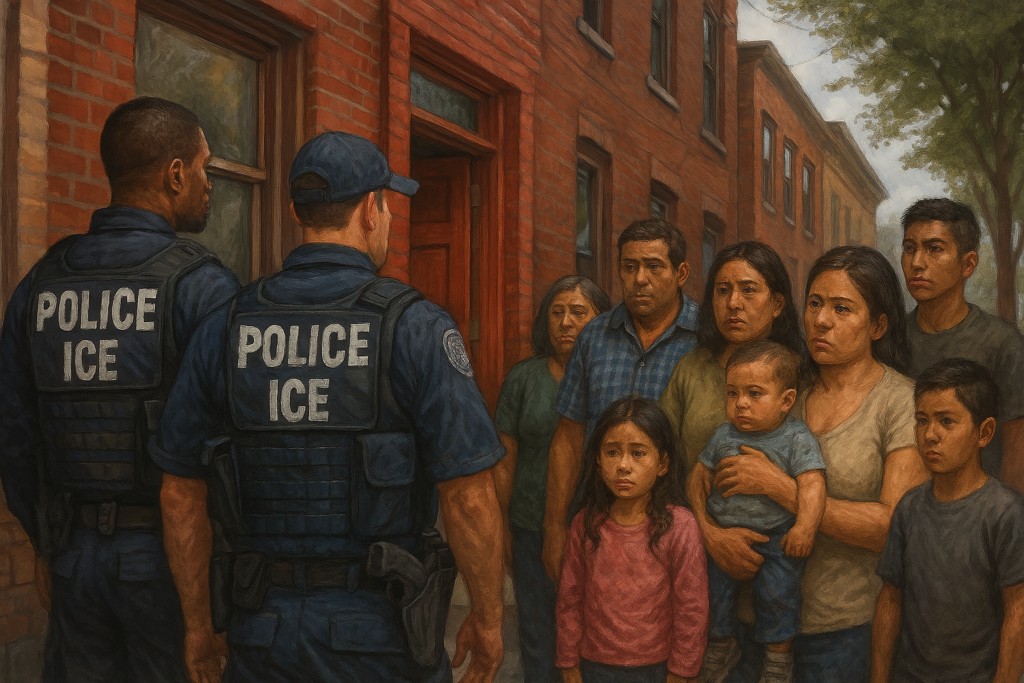
Prepared by Buffalo Latino Village Buffalo has an active ICE field office and detention facility that affect local immigrants, including Latinos, though Puerto Ricans as U.S. citizens are sometimes wrongly targeted or harassed in broader enforcement sweeps, and the same with other American Latinos. Recent operations and community responses show impacts on West Side, Elmwood, and other diverse neighborhoods where many Latino families live, work, and own small businesses. Local ICE presence in Buffalo: ICE’s Buffalo Field Office is located at 250 Delaware Avenue and oversees enforcement for Western, Central, and Northern New York, which includes Buffalo’s Latino neighborhoods. Detained individuals are commonly taken to the Buffalo Federal Detention Facility in Batavia, an ICE–Enforcement and Removal Operations (ERO) site used for arrests from Buffalo and the region. Recent raids and Latino communities: In November 2025, ICE and other federal agents arrested four undocumented workers from Mexico and Guatemala at a restaurant on Elmwood Avenue; local advocates and Assemblymember Jon Rivera condemned the operation as an attack on a diverse, immigrant-heavy corridor. Reports indicate that during this period ICE went beyond a single business, setting up checkpoints, visiting Latino businesses, and entering nearby communities, raising fear among Latino workers and families regardless of status. West Side and neighborhood impact: Buffalo’s West Side, long home to immigrants and refugees, has seen visible ICE activity, including agents knocking on doors and parking on residential blocks, which has alarmed residents in mixed-status families and diverse communities. Local elected officials have publicly criticized these operations, describing ICE as “out of control” and warning that policy is being “weaponized” against people who pose no public safety threat, a concern directly relevant to law‑abiding Latino and Puerto Rican residents. BUT THEY HAVE NOT GONE FAR ENOGHT! Puerto Ricans, citizenship, and ICE: Puerto Ricans are U.S. citizens by birth, and national Latino organizations such as the Puerto Rican Bar Association have condemned ICE for incidents where Puerto Rican families were illegally detained alongside immigrants, underscoring the risk of racial profiling when Latinos are broadly targeted. These statements argue that aggressive enforcement campaigns framed as “cleansing” undocumented populations can sweep up Puerto Ricans and other Latino citizens, deepening fear and confusion in communities like Buffalo’s where mixed-status households are common. Courts, detention, and legal risks: Advocacy groups have documented that ICE arrests people in and around immigration courts in New York, including at the Buffalo Immigration Court, which can deter Latino immigrants from appearing for hearings or seeking help. For those detained after Buffalo-area arrests, families often must navigate bond posting and communication through the Batavia facility, making access to legal counsel and support especially critical for Latino and mixed-status families. Latino focused groups Buffalo Latino Village: Community newspaper and advocacy hub connecting Puerto Rican/Latino residents to resources, events, and activism; contact via email at latinovillage1@gmail.com or website for publishing, arts, and local news support. El Batey Puerto Rican Center: Cultural center focused on Puerto Rican music, bomba, heritage, and events; reach Beatriz Flores at 716-348-0156 or elbateyprcenter@gmail.com for community gatherings and assistance. Hispanic Heritage Council: Promotes Puerto Rican and Latino heritage through education, dance, and history programs; contact leaders like Casimiro Rodriguez at 716-912-3489 or cdr3455@gmail.com. Los Tainos Senior Citizens Center: Serves Puerto Rican seniors with social services, activities, and support; listed as a key resource for older adults in the community.buffalolatinovillage+1 Broader Latino organizations Hispanos Unidos de Buffalo (HUB): Provides housing, mental health, substance use treatment, domestic violence support, food distribution, and rapid re-housing for Latino families; bilingual staff available, affiliate of Acacia Network. Hispanics United of Buffalo: Offers integrated social services, health programs, and community empowerment for Hispanic/Latino residents. Latino Housing Development Corporation: Assists with affordable housing and development needs for Latino families in Buffalo. Hispanic Women’s League: Supports Latina women through advocacy, education, and social services. Latino Veterans Association of WNY – Aids Puerto Rican/Latino veterans; contact Jose C. Pizarro at 716-207-7883. No longer in operation, but founder is a reliable source and can direct people to the right source of assistance or help. Amor and Heritage: Focuses on Puerto Rican dance, heritage, and cultural preservation; reach MarCe Zerrate at 716-241-1510. Direct Immigration-focused legal services: Journey’s End Refugee Services Immigration Legal Services: Provides free immigration representation (citizenship, green cards, family reunification, asylum, work permits, TPS, DACA, and removal defense) with a Buffalo office at 2495 Main Street; services are aimed at low‑income immigrants across Western New York and often include community education sessions where Spanish interpretation can be requested. Legal Aid Bureau of Buffalo/Immigration: Offers free immigration help for low‑income people, including naturalization, green card applications, family petitions, and advice when immigration status intersects with criminal cases or family court, which is important for Latino immigrants dealing with both ICE and local courts. Catholic Charities of Buffalo/Immigration and Refugee Assistance: Provides low‑cost help with USCIS forms (adjustment of status, family‑based petitions, work authorization, naturalization) plus non‑legal services such as ESL, employment, and social services, which can support newly arrived or long‑time Latino immigrants. General civil legal aid with immigration awareness ECBA Volunteer Lawyers Project: Delivers free civil legal services (family law, housing, consumer issues, and some immigration matters) to low‑income residents; this can be vital for Latino immigrants experiencing landlord disputes, divorce, custody, or domestic violence tied to immigration stress. Neighborhood Legal Services: A public‑interest law firm offering free legal aid in areas such as housing, disability, and public benefits; they can advise immigrants and mixed‑status Latino families on rights around evictions, benefits eligibility, and related civil issues. How Latino immigrants can use these resources Call intake lines or walk‑in hours (where available) to schedule a consultation and specifically ask for Spanish‑speaking staff or interpreters; many of these programs either have bilingual staff or access to interpretation. When contacting any of these offices, bring or have ready all documents related to immigration status, prior filings, court notices, and any ICE paperwork, which helps attorneys quickly evaluate options for Latino clients facing removal, family separation, or status questions. COMMUNITY ACTION Communities can protect immigrants from ICE by organizing rapid response networks, educating people about their rights, and building strong support systems that